Sunday, March 2, 2014

Christ Church, Philadelphia

 Christ Church was founded in 1695, and it has been in continual use as an Episcopal parish church ever since.  The current building dates back to 1754.  Its spire was once the defining feature of Philadelphia's skyline--a skyline that remained quite humble until about thirty years ago, when it hit a growth spurt that continues to this day.
 I first visited the church in 1990, and of course it hasn't changed in the slightest.  One of the jobs of a historic religious edifice is to remain the same, I suppose.  Benjamin Franklin was a member here, and both Washington and Jefferson frequently attended services.
 It's a beautiful example of an English urban parish church, right here in the US.
 I was a little surprised to discover a member of the Penn Family interred beneath the floor.  This is the only Penn who got buried on this side of the Pond.
 The discovery was surprising because I supposed that the Penns had all been Quakers.  Pennsylvania was a much kinder and more progressive place when it was run by Quakers--peace-loving people who treated the Indians with respect and tolerated immigrants from many religious and cultural backgrounds.
Apparently even the Penns ended up converting to the national Church of England eventually.  Aesthetically, the Church of England runs circles around the Quakers.  Just look at the beauty of this place.  It evokes feelings of The Numinous.  It's so much more inspiring than the plain meetinghouses used by William Penn's lot.  But ethically, well, let's just say that the world could use a few Quakers in high places nowadays.  Except Richard Nixon.  That was one bastardly Quaker....

Old City, Philadelphia

 I truly haven't had a day off for a month, but my wife's work was taking her to Eastern Pennsylvania, so it made a nice opportunity to reacquaint myself with one of my favorite cities.
I love all the architecture from the late Stuart and early Georgian eras.  Elegant, symmetrical, airy, with lots of natural light.
 With the wife and kids in tow, we stuck to the historic sites in Old City, which is admittedly a pretty cool part of town: the juxtaposition of old on new is what I like.
 We saw the typical attractions, most of which I'd seen before: Independence Hall, The Liberty Bell, the Betsy Ross House, Christ Church, and of course City Tavern, the 1773 alehouse and restaurant pictured just below, where so many of the Founding Fathers used to gather.  We had lunch there; the menu is all 18th century and it includes some unexpected items--even if it's nothing to write home about.
Philly is a great town with that whole East-Coast-hurried-feel to it.  It's got a gleaming glass and steel skyline to the west and lots of interesting neighborhoods.  Even on a Sunday morning, the sidewalks here in Center City are abuzz with fashionably dressed WASPs rushing from place to place and looking very concentrated.  Philly has an international flare found nowhere else in the Commonwealth, even though most tourists never see anything but Old City.   
In the 1700s, Philly was the largest and richest city in North America.  Not only was it bigger than New York, but after London, it was the largest city in the English-speaking world.  It remains the only "World Class City" in Pennsylvania--which is to say, a city with more than one million inhabitants.  And Philly is growing again!  Although most of the historic old cities in the Northeast are losing their populations to the suburbs, Philly's city population has been increasing for about a decade.
I love my country, of course, but I'm embarrassed by patriotism.  And yet, I've got to admit that there's something kind of moving about these ancient buildings where our nation was forged.
Independence Hall is shown in the top photo.  It was originally the seat of government for the Colony of Pennsylvania, and it's more than 280 years old.  This bottom picture is the room in "Congress Hall" where the US Congress used to meet during the ten years when Philadelphia was the capital of the nation.  I gotta say, the tour guides around here really seem to love their jobs.

Monday, January 20, 2014

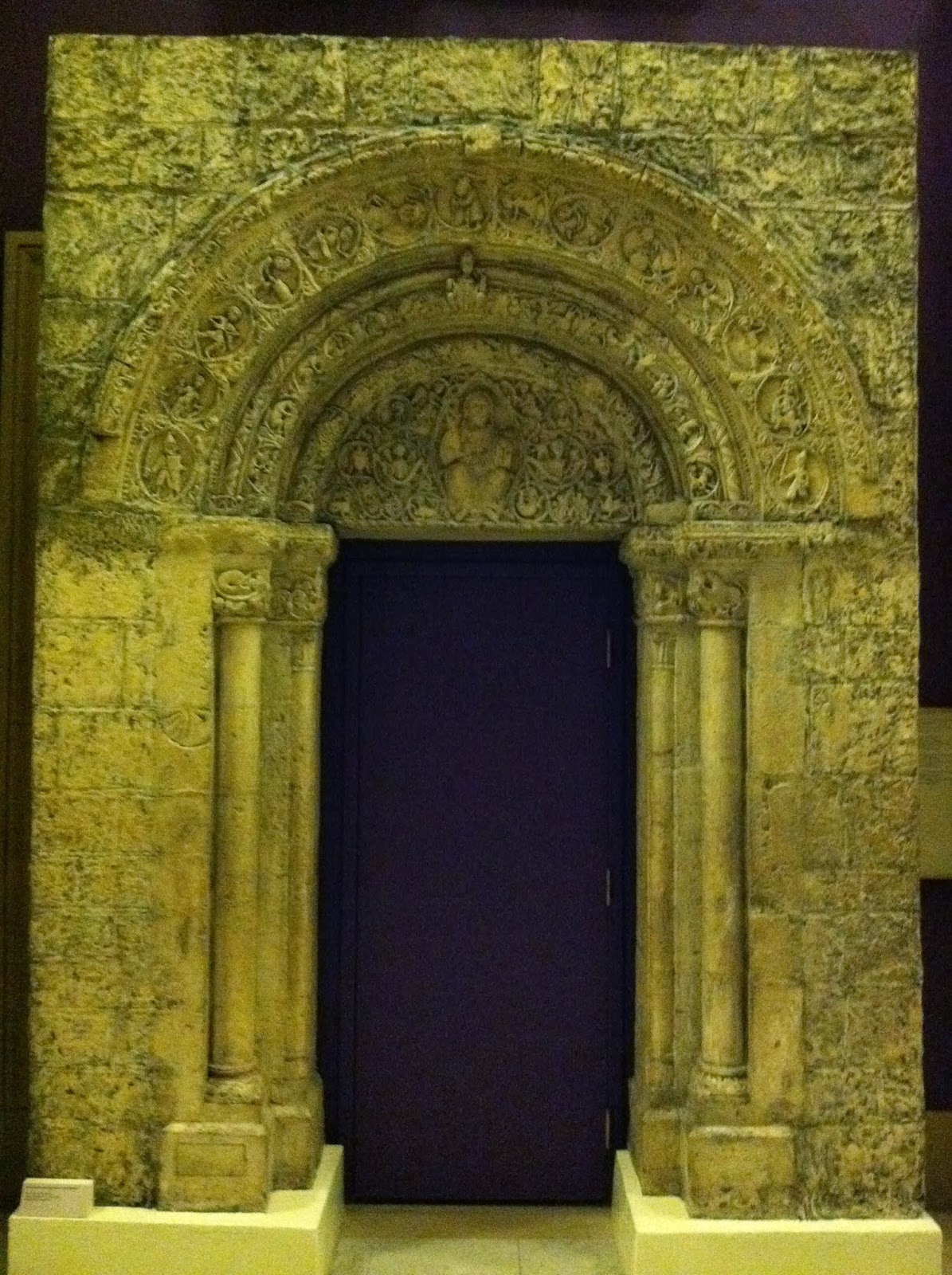
Passages: Doorways in the Carnegie Museum Hall of Architecture

Ever since childhood, the Hall of Architecture has been my favorite room in the Carnegie Museums.
 But each time I tried to take my kids there in 2013, I found it closed for renovations. 
 It was great to find the exhibit reopened today, though I'm not sure what they've been renovating.  It looks just exactly the same as it did in the 1970s.
 I wonder if there's not something hopelessly utilitarian about a culture that no longer puts any aesthetic effort into its entrances and doorways.
 In modern times, even the entrances to prominent public buildings are typically undecorated, ugly metal and glass.  They seem to say, "Get in here, get your business done, then get out.  Accomplishment is the only thing that matters."
 These ancient doorways convey a powerful emotional message.  They say, "When you enter these doors, you are entering into more than just a building.  You are entering into a story, a tradition, a community that is bigger, and older, and infinitely wiser than you are alone."
 This ecclesiastical doorway might be my favorite, with fantastic creatures nesting in its intricately vining tracery.  It comes from medieval Norway.  
This one is Roman.  Nice, but I far prefer the ones with nature themes.  They look like something from The Hobbit.

Wednesday, January 15, 2014

Keystone State Park Revisited

To the untrained eye, this view looks like just another obnoxious powerline swath, or "easement," that's been cut through the forest.  Pipeline and powerline swaths are harmful to our woodlands, and I despise them.  But I actually like this one for the view that it affords.  Look at the misty blue ridgeline in the furthest distance.  This is a southeasterly view toward Chestnut Ridge, the westernmost summit in the Appalachian Mountains as they pass through Pennsylvania.  The mountains begin here, some forty miles east of Pittsburgh.  I think this view was the highlight of today's trip back to Keystone State Park.
I'm not sure why I wanted to go back to Keystone.  Maybe I'm an underachiever.  Maybe I'm a lover of self-sabotage.  But there was something about the place that allured me today.  I went there for the first time on the day after Christmas, and I knew when I left that I would have to return to hike the southern portion of the park.  Now I can confidently say that I've been on every inch of trail the park offers.
 Like I said before, in so many words, Keystone is just a little too tame for me.  It's surely nice in the summer for folks who enjoy flatwater canoeing, fishing, and lake swimming.  But for those of us who love the deep woods, the world encroaches just a little too close to this parkland.  The noises of passing trucks and nameless machines are distant, but ever-present here.  "Hiking" at Keystone is always more like "taking a walk in the woods."
But for me today, it was a restorative walk.  I used to believe that I would be happier than a Kardashian if I could only own fifty acres of woodlands.  All I wanted was just my own little woodlot to explore, and understand, and discover in every season.  A single place can have many different faces depending on the time of day and the time of year you visit.  I even looked into purchasing some wooded land up North, though buying land in Western Pennsylvania has become hazardous; if you don't get the mineral rights, the frackers can roll in and destroy everything.  
But I think I'm learning the wisdom of the Buddha's saying, "Have one love, have one worry.  Have two loves, have two worries."  If I actually had my own patch of woods, I would forever be worrying about windstorms, and strangling vines, and hemlock adelgids, and emerald ash borers.  And there would be bagworms, and gypsy moths, and oak wilt, and beech disease to worry about.  If I owned it, I would walk the land anxiously, looking for signs of trespassers, and poachers, and tree disease.  

It's better to walk the land than to own it.  Ah, but look at that far-off summit.  I fain would wander off into those ridges and disappear me in their darkling folds and hollows--all leafless and gray--"far from the madding crowd's ignoble strife."  I could go all Mick Dodge... But alas, I long ago heard the siren's song of non-profit work, and I've got an unfashionable but very rewarding institution to lead into the future.  Funny how one decision, made long ago, turns around to make many of your subsequent decisions for you.  I've chosen a different path, and it has limited my options as I move forward.  It's a path that only occasionally traverses that tantalizing ridgeline.

I'm glad the recent arctic cold spell killed many of the invasive bugs that are trying to kill our trees.

Tuesday, December 31, 2013

Iconic Towns of the Mon Valley: Brownsville, PA

 Last winter, I published a series of posts that explored some of the best known towns in the valley of the Monongahela River.  The coverage was limited to towns along the lower river, in Allegheny County.  But there are lots of other interesting old cities upriver and further south.  Today, I had an opportunity to walk around downtown Brownsville.  It's an intriguing place that looms large in the history of this region, but I've never had the opportunity to give it the attention it deserves.  Like all the old Mon Valley towns, I found that I liked the place.  Unlike its downriver neighbors--McKeesport, Duquesne, Clairton, and Braddock--Brownsville is not separated from the river by a vast, blighted field where a steel mill once stood, or still stands.  It's a pleasant town, perched comfortably right on the banks of the great Monongahela.  It's an old town, first settled in the 1750s and 60s.  It's a poor town.  Nearly all the storefronts along the main street--pictured here--are vacant.  There are many derelict houses, and churches, and businesses.  I didn't see it, but I'm told there's even a big, abandoned hospital.
 Huddling under a bridge--like some fairy tale troll--"Fiddler's" restaurant is a local landmark, and it still does a lively business.  Brownsville reminds me very much of my hometown, Oil City, PA.  It's got the same small town feel, walkable, livable, built to a human scale.  It's got the same interesting old architecture, the same hilly terrain, steep streets, intriguing alleyways, dark windows.  There's a forlorn beauty to both towns, though Brownsville is far older...and grittier...and more abandoned.
Locals are making some attempt to spark new development in their community, like this riverside park with its enigmatic solar panels.  As much as I like the place, I'm pretty sure I won't be buying a cheap, ramshackle mansion and relocating to Brownsville.  I felt conspicuous there.  The few people roaming the cold streets were strangely obese, and they looked at me with more suspicion than I liked.  Unfortunately, I didn't get a shot of Nemacolin Castle, which has been presiding over the city since the late 1700s.  It's not much to look at, but I like anything from the 18th century.

Ohiopyle State Park and Borough

It wasn't the best day to tackle the windy summits of the Laurel Highlands at Ohiopyle State Park, but it was the only day I would be getting, so I gave it a shot.  This is the view from Baughman Rocks, looking east into the valley of the Youghiogheny River.
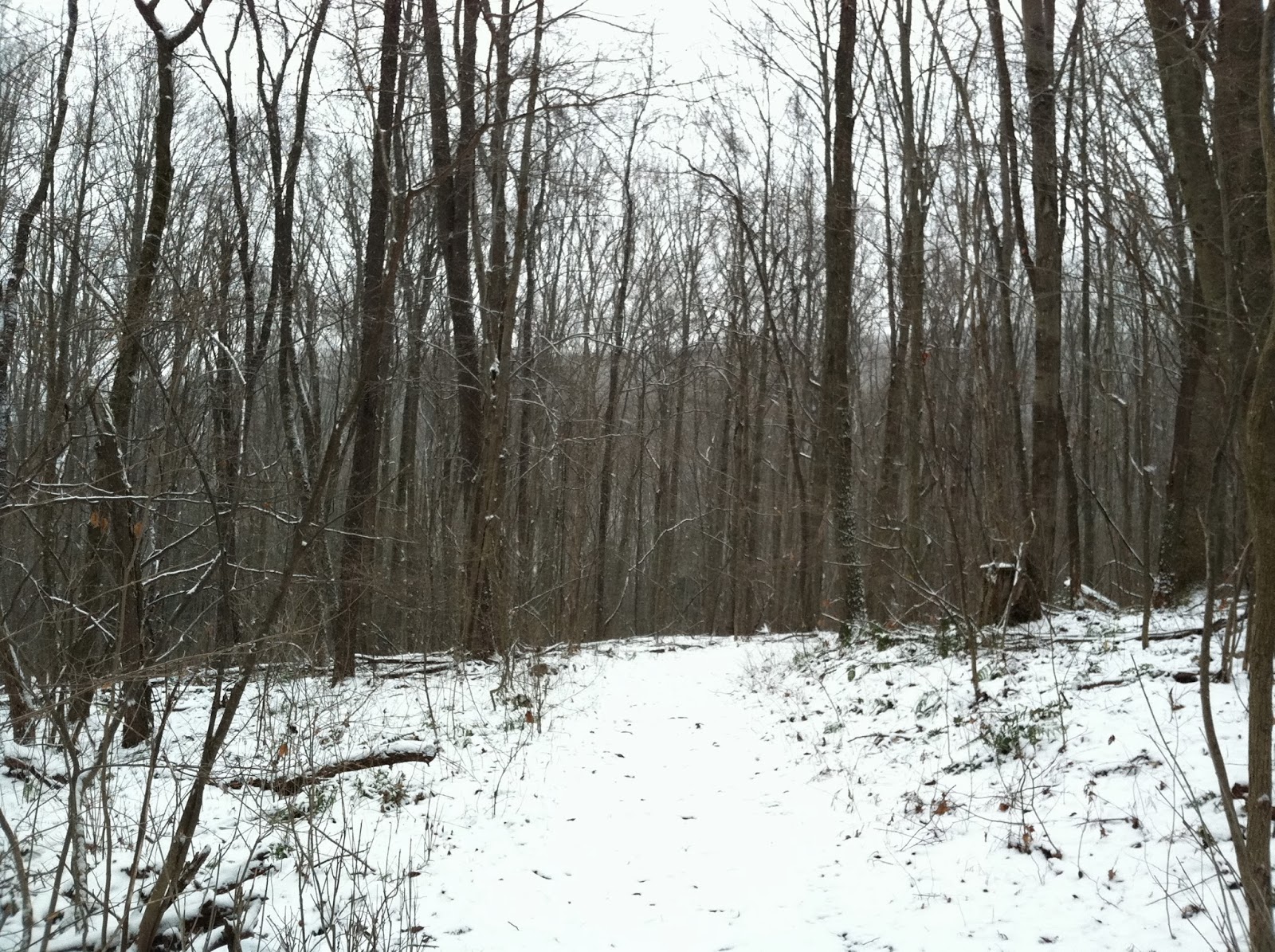
 I didn't know just how snowy it would be up in the mountains.  I had originally intended to hike the McCune Trail loop, but the roadways were buried, and there was nowhere to park.  Besides, the wind came screaming over those peaks at bone-chilling speed.  I ended up settling for a lower trail through the valley of Meadow Run.
 Just a solitary path through wintry mountains.  What more could a guy ask from life?  
I'm not sure why I've never hiked Ohiopyle before.  It's THE name in outdoor adventures in the Pittsburgh region, and it's only an hour and a half from home.  I guess I was saving it for a special occasion.
 The little borough of Ohiopyle is surrounded by the park.  It caters very much to the hiking-whitewater-mountainbiking crowd.  My guess is that it's largely a summer destination.
And yet, despite all the many open-air restaurants (closed for the season) and whitewater kayaking outfitters (closed for the season), there's a gritty quaintness about the place.  It's a typical mountain village with large clapboard houses along the main street, a pleasant riverside park, and at least one pretty church, Methodist.
This is the Great Allegheny Passage as it crosses the Yawk in the borough of Ohiopyle.  I'll definitely be coming back when the weather breaks.